

02 Mar What Is Bookkeeping? Definition, Tasks, Terms to Know

DEBT SECURITIES issued by companies with higher than normal credit risk. Considered «non-investment grade» bonds, these SECURITIES ordinarily yield a higher rate of interest to compensate for the additional define bookkeeping risk. Process designed to provide reasonable assurance regarding achievement of various management objectives such as the reliability of financial reports. The sum of beginning inventory and the net cost of purchases during a period; the total goods available for sale to customers during an accounting period.
Accounts Payable Subsidiary Ledger
This proactive approach allows companies to prepare for challenges rather than face unexpected negative outcomes. Accounting conservatism aligns with standards such as GAAP and IFRS, emphasizing transparency and preventing misleading financial reporting. By following these guidelines, companies can ensure compliance while providing reliable financial information. Moreover, excessive application of conservatism can create bias in financial reporting, leading to a consistently low representation of a company’s financial health. This can mislead stakeholders about the company’s true performance capabilities.
Keep your general ledger current

Bookkeeping is a rather simple and straight forward process which can be easily learnt while you’re on-the-job. Business entities choose from two types of bookkeeping systems, although some entities use a combination of both. Here’s an example of how you’d enter a transaction in the Intuit software. As you learn more about bookkeeping, use the opportunity to build or strengthen key technical and workplace skills needed to be successful in this role. Take your learning and productivity to the next level with our Premium Templates.
Create a free account to unlock this Template
- That means bookkeeping can have a direct impact on account charts; if information is incorrectly recorded it will change what’s displayed in charts.
- Relationship between two or more persons based on a written, oral, or implied agreement whereby they agree to carry on a trade or business for profit and share the resulting profits.
- Bookkeepers regularly summarise this activity into reports that show how the business is doing.
- There are some financial tasks that bookkeepers aren’t equipped for; that’s where accountants come in.
- This transparency is essential for trust and informed decision-making in financial operations.
A CORPORATION which, under the INTERNAL REVENUE CODE, is generally not subject to federal income taxes. Instead, taxable income of the corporation is passed through to its stockholders in a manner similar to that of a PARTNERSHIP. Recurring financial activities reflected in the accounting records in the normal course of business. A put is an option to sell a certain number of shares of stock at a stated price within a certain period. The gain or loss on a put is short or long term depending on the holding period of the stock involved.
The upper half lists operating income while the lower half Balancing off Accounts lists expenditures. The statement tracks these over a period, such as the last quarter of the fiscal year. It shows how the net revenue of your business is converted into net earnings which result in either profit or loss. It is a financial report that tracks incoming and outgoing cash in your business.

How does Accounting Conservatism align with accounting standards?
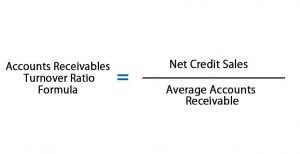
One of the main duties of a bookkeeper is to keep track of the full accounting cycle from start to finish. The cycle repeats itself every fiscal year as long as a company remains in business. Bookkeeping is the day-to-day documentation of a company’s financial transactions. Crucial investments, business operations, and financial decisions are made based on performance analysis reflected in these records. Bookkeepers use either single-entry or double-entry methods to record transactions.
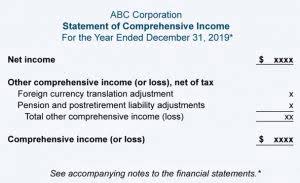

DEFINED CONTRIBUTION PLAN characterized by the setting aside of a portion of an entity’s profits in participant’s accounts. http://hungralia.com.au/2022/03/18/chart-of-accounts-explained-a-detailed-how-to-2/ High/low range in which a stock has traded over a particular period of time. Cost incurred to acquire economically useful goods or services that are expected to be consumed in the revenue-earning process within the operating cycle. An actual count of all MERCHANDISE on hand at the end of an accounting period. Income reported on a TAX BASIS for which no cash or financial benefit is realized.
- BOND issued by a government or public body, the INTEREST on which is typically exempt from federal taxation.
- A procedure that consists of seeking information, both financial and non financial, of knowledgeable persons throughout the company.
- The difference in perception between the public and the CPA as a result of accounting and audit service.
- If you’re looking to convert from manual bookkeeping to digital, consider a staggered approach.
- The AICPA establishes ethical and auditing standards as well as standards for other services performed by its members.
- Process designed to provide reasonable assurance regarding achievement of various management objectives such as the reliability of financial reports.
- Accounting reports give a picture of the financial performance of a business, and determine how much tax is owed.
- Whether you’re getting paid by a customer, spending cash on office supplies, buying new office equipment, or writing off a bad debt, every financial transaction needs to be captured and recorded in a particular way.
- Because bookkeeping involves the creation of financial reports, you will have access to information that provides accurate indicators of measurable success.
- In accounting, software has automated large portions of bookkeeping and tax preparation without eliminating accountants, who have moved up the value chain toward advisory, forensic and judgment-intensive work.
- In capital budgeting; the length of time needed to recoup the cost of capital investment.
- In addition to these recording and reporting tasks, the bookkeeping function also handles all billings to customers and invoice payments to suppliers, as well as compensation payments to employees.
- Find out what bookkeepers do, and get an intro to double-entry bookkeeping.
But it’s in the 15th century that the roots of modern bookkeeping can be found. And fittingly, there are two entries in the history books for who documented the double-entry system. Some credit Benedetto Cotrugli and his 1458 book Of Commerce and the Perfect Merchant.